


The 4 month sleep regression is a sudden run of broken nights and short naps that usually starts around 3 to 4 months and lasts from a few days to a few weeks, often two to six. It happens because your baby's sleep is changing to work more like an adult's: they now pass through lighter sleep between cycles, and many wake fully at those points and need help to settle again.
It is not a sign that anything is wrong, and it does pass. What helps most is a calm, consistent routine, a little patience before you go in at night, and keeping their sleep space safe now that they may be starting to roll. Below you'll find the signs, how to tell it apart from illness, what to try and what to skip.
What is the 4 month sleep regression?
Newborns sleep in short, simple stretches. Somewhere around 3 to 4 months, a baby's sleep matures: it starts to run in cycles with lighter and deeper stages, much like ours. At the end of each cycle there is a brief, light phase where they partly wake.
Adults barely notice these moments. A baby who fell asleep while being fed, rocked or held often does notice: they wake into a different situation from the one they fell asleep in, and call for help to get back to sleep. That's why a baby who was managing longer stretches can suddenly start waking again and again through the night.
So the "regression" is really a progression. The new sleep pattern is here to stay. What settles down after a few weeks is how well your baby gets from one cycle to the next.
Signs your baby is in the 4 month sleep regression
The Sleep Foundation lists these common signs:
- Taking longer to fall asleep, or seeming restless at bedtime
- Waking more often at night, sometimes with crying
- Being grumpy or upset on waking
- Sleeping less overall, at night and during the day, which can unsettle feeding too
Shorter naps are often the first thing parents notice: a baby who used to nap for a long stretch now wakes after a single sleep cycle.
When does it start and how long does it last?
Most babies show signs between 3 and 5 months. It follows development rather than the calendar, so the exact timing varies from baby to baby.
It usually lasts a few days to a few weeks. Many families describe two to six weeks of disrupted nights. Babies who learn to settle themselves between cycles tend to come through it faster, which is why the steps below focus on that.
Is it the regression, or something else?
Broken sleep at this age has other causes too. Before you put it all down to the regression, check:
- Hunger. Your baby may genuinely need an extra feed for a while, especially on busy, active days.
- Rolling and new skills. Babies who are learning to roll often practise in the cot and wake themselves up.
- Illness. A cold, a blocked nose or an ear infection can all disturb sleep.
The Sleep Foundation advises contacting your doctor if your baby has slow growth or weight gain, fewer feeds, fewer wet or dirty nappies, or abnormal breathing during sleep. In the UK you can also call your health visitor, your GP or NHS 111. Trust your instincts: if your baby seems unwell rather than simply unsettled, get them checked.
What helps during the 4 month sleep regression
None of these is a quick fix, but together they help your baby learn to link one sleep cycle to the next.
- Keep a simple bedtime routine. The NHS suggests a consistent routine such as a bath, a fresh nappy, a story and dimmed lights. The same few steps, in the same order, signal that sleep is coming.
- Make days bright and nights boring. Daylight and play during the day, quiet and dim at night. The American Academy of Pediatrics advises trying not to stimulate or wake your baby when you feed or change them during the night.
- Put your baby down drowsy. The AAP suggests putting babies to bed when they are drowsy, so they get used to falling asleep in the cot. Some nights this won't work, and that's fine.
- Pause before you go in. Babies make plenty of noise between cycles: grunts, whimpers, a short cry. Waiting a moment to see whether they settle on their own gives them the chance to practise. Go in if the crying builds or doesn't stop.
- Keep night feeds short and calm. If your baby is hungry, feed them, but keep the lights low and the talking quiet, then put them back down.
- Watch for sleepy cues. Yawning, rubbing eyes or staring off are signs to start the routine. An overtired baby often finds it harder to settle.
- Give naps a fair chance. If a nap ends after one cycle, try settling your baby back down for a few minutes before you start the day again.
- Use quiet white noise if it helps. Steady background sound can soften the noises that wake babies between cycles. Keep it low and away from the cot, and use a timer. Our guide on whether white noise is safe for babies covers volume and distance.
- Look after yourself. Take turns with a partner if you can, rest when your baby naps, and accept help. Broken sleep is hard, and it is temporary.
Safe sleep when your baby starts rolling
The 4 month regression often arrives alongside rolling, and that changes a few safe sleep rules.
- Stop swaddling at the first sign of rolling. The American Academy of Pediatrics says to stop swaddling as soon as your baby shows any sign of trying to roll over. Some babies start as early as 2 months. A sleeveless sleep bag keeps them warm without restricting their arms.
- Always put your baby down on their back. The NHS advises placing your baby on their back in the feet-to-foot position for every sleep.
- Once they roll both ways on their own, the AAP says you don't need to keep turning them onto their back. If they can only roll one way, gently turn them back.
- Keep the cot clear. A firm, flat mattress with a fitted sheet and nothing else: no pillows, bumpers, loose blankets or soft toys, and no positioners to stop them rolling.
- Keep them in your room. Both the NHS and the AAP advise that babies sleep in the same room as you for at least the first 6 months.
Using a baby monitor during the regression
For night sleep, the safest place for your baby is in your room. A monitor still helps for naps, for evenings while you're downstairs, and for that moment at 2 a.m. when you're deciding whether to go in.
Being able to look before you go in makes step 4 above much easier: you can see whether your baby is resettling or properly awake, without opening the door and waking them further.
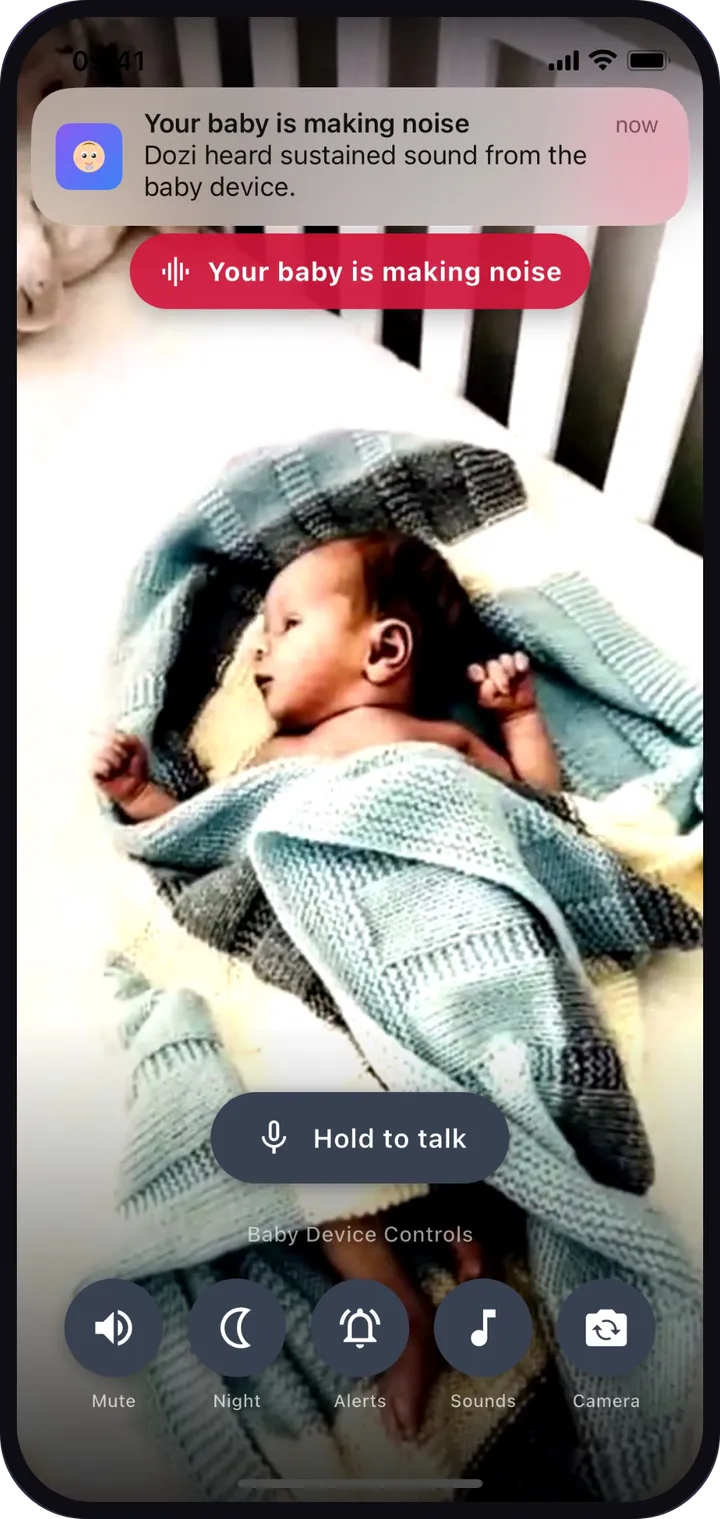
Dozi turns two iPhones or iPads on your home Wi-Fi into a baby monitor:
- Cry alerts reach your phone even when it's locked. Dozi alerts on sustained sound rather than a single cough or bang, so the brief noises between sleep cycles are less likely to set it off.
- Soothing sounds on the baby's phone, such as white noise, rain or a lullaby, with a sleep timer of 15 minutes, 30 minutes or an hour. Noise alerts pause while a sound plays.
- Talk back: hold to talk, so a familiar voice can sometimes settle them without you going in.
- Night vision brightens a dimly lit room on the camera. It isn't infrared, so a little light helps.
Video and sound go directly between your two devices and never leave your home. There's no account to set up, and setup takes a QR code scan. A monitor is a help, not a replacement: keep following safe sleep advice and check on your baby in person whenever you're unsure.
The short version
- The 4 month sleep regression starts around 3 to 5 months and usually lasts a few days to a few weeks.
- It happens because your baby's sleep now runs in adult-like cycles, and they're learning to get from one to the next.
- A steady routine, drowsy-but-awake bedtimes, calm night feeds and a short pause before you go in all help.
- Stop swaddling at the first sign of rolling, always put your baby down on their back, and keep the cot clear.
- Call your health visitor or doctor about feeding or weight worries, fewer wet nappies, breathing that seems unusual, or if your baby simply seems unwell.
Frequently asked questions
How long does the 4 month sleep regression last?
Usually a few days to a few weeks. Most families describe two to six weeks of broken nights before sleep settles into a new pattern. A calm, consistent routine tends to shorten it; if your baby's sleep is still very disrupted after six weeks, or something else worries you, talk to your health visitor or doctor.
Can the 4 month sleep regression start at 3 months?
Yes. It is linked to development, not a birthday, so some babies show the signs from around 3 months and others closer to 5 months.
Is the 4 month sleep regression a myth?
The name is misleading, but the change is real. Around this age a baby's sleep starts to cycle more like an adult's, with lighter sleep between cycles. Babies who need help to fall asleep often wake fully at those points. Not every baby shows obvious signs, and it is a step forward in development rather than a step back.
Should I start sleep training during the 4 month sleep regression?
You don't have to. Some parents start gentle approaches now, such as putting their baby down drowsy and pausing briefly before going in. Some experts suggest waiting until around 6 months for more structured sleep training. Whatever you choose, keep following safe sleep advice.
Do I need to stop swaddling during the 4 month sleep regression?
Stop swaddling as soon as your baby shows any sign of trying to roll, which often happens around this age. The American Academy of Pediatrics advises this because a swaddled baby who rolls onto their front may not be able to turn back. A sleeveless sleep bag is a safe alternative.
First published . This guide is general information, not medical advice.